

RESEARCH
Wood-based PCM could save energy, costs
University of Texas at Dallas (UT Dallas) researchers and their collaborators have developed and patented a wood-based thermal energy storage solution that could be incorporated into drywall, flooring, or roofing to improve energy efficiency in buildings.
“Our material acts as a thermal battery that charges as it absorbs heat,” said Shuang (Cynthia) Cui, assistant professor of mechanical engineering in the Erik Jonsson School of Engineering and Computer Science. “During the summer, for example, the phase-change material [PCM] will absorb and store heat from the exterior, which would reduce the rise of room temperature. If the building has enough phase-change material incorporated, the air conditioning may not need to be turned on.”
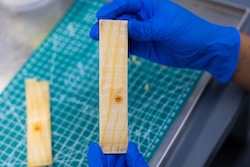 Encapsulation is a common solution for addressing leakage when PCMs transition to a liquid. One drawback to encapsulation is that the host material does not store heat.
UT Dallas researchers instead addressed the leakage issue by using lignin, a biopolymer that provides structural support and water transport capability in plants. They filled the spongelike structure with PCM mixed with an ingredient that formed a pliable soft plastic to hold the PCM in place and strengthen the wood. The team reported no leakage or degradation over 1,000 phase-change cycles.
“Unlike many energy-storage materials that sacrifice strengths, these wood-templated phase-change composites maintain mechanical integrity under repeated heating and cooling cycles, making them both energy efficient and mechanically durable, which are critical for long-term use in buildings,” said Hongbing Lu, a mechanical engineering professor and director of the Mechanics of Advanced Materials Laboratory.
The researchers said they plan to commercialize the technology.
The project was a collaboration with the National Renewable Energy Laboratory (recently renamed the National Laboratory of the Rockies), the University of Colorado Boulder, the Lawrence Berkeley National Laboratory, and the University of California, Berkeley.
RAL UPDATE
Sasol’s PARAFOL 18 PF earns certification
Sasol’s PARAFOL 18 PF is the latest phase change material (PCM) to be awarded the RAL Quality Mark by the RAL Quality Association PCM. Sasol (Hamburg, Germany) said on LinkedIn that producing the PCM from palm-free renewable feedstock reflects its commitment to sustainability and responsible sourcing.
“Certification confirms PARAFOL 18 PF’s reliable quality and performance for demanding thermal energy storage applications,” said Ulrike Grube, Sasol’s product marketing alcohols Eurasia. “For us and our customers, recognized standards are essential to ensure consistent, efficient, and sustainable solutions.”
PARAFOL 18 PF is characterized by high purity n-octadecane, high latent heat, biodegradability and thermal stability. It is a high-purity, palm oil-free paraffin (nC18 paraffin >97%), based on natural raw material grown in Europe and manufactured in a multi-stage process patented by Sasol.
With a sharp melting point of around 27°C and a melting enthalpy of >220 J/g, it is particularly suitable for latent heat storage in construction, textiles, and bedding.
IN BRIEF
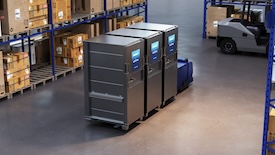 • On Feb. 18, va-Q-tec and Wanzl (Leipheim, Germany) launched their jointly developed Thermo Trolley, a container that enables transport of chilled and frozen foods without refrigeration, dry ice, or cold packs. Thanks to vacuum insulation, the internal temperature remains stable without external power for up to 12 hours and up to 24 hours with two cooling batteries with a PCM volume of around 5 liters. “With the Thermo Trolley, we are taking the next step in supermarket food logistics. Customers can reduce costs by up to 75% over the service life. Maintaining the cold chain becomes less complex, more flexible and more sustainable. With the new Thermo Trolley, the temperature remains consistently stable during transport of chilled and frozen foods, even without active refrigeration,” said Felix Rau, vice president, Business Unit TempChain, va-Q-tec (Würzburg, Germany). The Thermo Trolley is available in various sizes and configurations and with skids or casters.
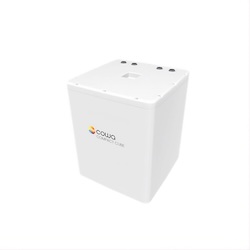 • Thermal Solutions AG (Root, Switzerland) launched its COMPACT Cube 48 at a trade show in February. Cowa’s most highly compact thermal energy storage solution to date is designed for decentralized domestic hot water in modern heating systems. The tankless COMPACT Cube 48 measures only 600mm x 500mm x 520mm, uses phase change materials (PCM) to provide 6kWh of thermal energy, and allows for a 15L per minute flow rate and tapping volume of up to 230 liters.
• Hold the date for the next hybrid meeting of the RAL Quality Association PCM General Assembly meeting on Sept. 29 and 30 in Berlin. Rubitherm Technologies GmbH will host the meeting.
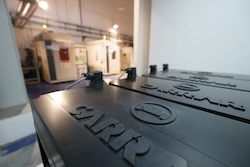 • Carrar (Hanegev, Israel) says testing proves that its battery that utilizes a two-phase immersion architecture prevents cascade failure and exceeds the requirements of China’s GB 38031-2025 standard. “We’re seeing the triggered cell hit catastrophic temperatures while adjacent cells remain near ambient,” VP Product Bar Ben Horin told Charged: Electric Vehicles Magazine. The company said the test drove a 72 Ah pouch cell into thermal failure, with temperatures rising at more than 15 °C per second to more than 800 °C, while an adjacent cell remained at about 50 °C. Carrar submerges battery modules in a dielectric fluid. The phase-change cooling keeps cell temperatures uniform and keeps thermal spikes from propagating. CEO Eitam Friedman told Charged that the battery energy storage system (BESS) should be commercially ready by the end of 2026.
• Alexium International announced on March 4 the official launch of its Predictive Thermal Profile (PTP), a proprietary modeling program that generates theoretical cooling performance data that enables manufacturers to better understand and compare the PCM performance and thermal behavior of an entire mattress system before it reaches the market. “Our goal is to give manufacturers a smarter way to validate and communicate cooling performance,” said Billy Blackburn, CEO of Alexium International. “The Predictive Thermal Profile allows brands to understand how their material selections work together before investing in full production runs.”
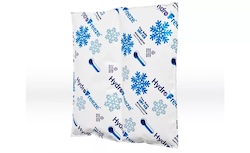 • Hydropac has launched a new version of HydroFreeze, a water-based ice pack that freezes 51% faster and provides 110% longer thaw protection than the original and that reduces freeze-down temperature from -30°C to -25°C. “Whether you’re shipping pharmaceuticals, perishables, or consumer goods, the new HydroFreeze ice pack range offers better control of your cold chain,” said Colin Rowland, managing director of Hydropac (Buckinghamshire, England). “It helps brands, packers, and logistics teams meet increasing demands from operational efficiency to sustainability targets.” HydroFreeze requires less CO₂ to produce, reduces waste, and allows for easier disposal than gels.
• Beam Global (San Diego, California) has been granted a new patent by the European Patent Office for its phase change composite, PCC, for lithium-ion batteries. The European patent expands upon Beam Global’s U.S. Patent No. 12,422,195 and extends the company’s intellectual property protection into Europe.
• Alexium International Group Ltd. (Greer, South Carolina) has completed the acquisition of Microtek Laboratories (Dayton, Ohio) and its microencapsulation and PCM business and associated intellectual property from CAVU Group. Alexium issued 361,717,485 new shares as consideration, making Microtek approximately an 11.5% shareholder, the Globe and Mail reported. It also reported that the entitlement offer raised about $6.77 million to fund acquisition costs, repay shareholder loans, and support working capital.
• Rebecca Ravotti, a research lecturer and team leader at the Lucerne University of Applied Sciences and Arts (HSLU) in Lucerne, Switzerland, is serving as one of two guest editors for a special issue of the journal Energies. Ravotti seeks submissions for the special issue, which will focus on “Innovations in Latent Heat Storage: From Phase Change Materials to Optimized Heat Exchangers” to highlight emerging solutions that enhance the reliability, scalability, and real-world applicability of latent heat storage technologies. Topics of interest include original research on innovative PCM development, advanced heat transfer enhancement techniques, novel heat exchanger designs for latent storage systems, and optimization strategies for improving thermal performance. Submissions will be accepted through Aug. 25. Go to https://www.mdpi.com/journal/energies/special_issues/HI46B7JF0Q for details or to submit a manuscript.
• Future Clean Architects (FCA), a climate innovation think tank in Remscheid, Germany, is looking for academic institutions interested in incorporating overlooked but high-impact cleantech technologies. FCA completed its first Future Cleantech Lecture Series in collaboration with the University of Wuppertal (Germany). FCA said the pilot confirmed its conviction that European climate and tech leadership merits early research and system design to take on the challenges of scaling and implementation. Academic institutions interested in exploring a collaboration with FCA are invited to contact mail@fcarchitects.org.
• The Institute of Physics (IOP) said it welcomes applications for its 2026 Business Innovation Award through March 27. The award recognizes the vital role physics plays in powering innovation to meet today’s challenges such as climate change and thereby creating jobs and growth. Sunamp (Edinburgh, Scotland) was a 2025 winner for its development for groundbreaking compact thermal storage using advanced finned tube heat exchanger technology that enhances heat transfer efficiency and energy storage in high flow rate hot water applications.
• Azenta, Inc., announced on March 2 that its affiliate, Azenta Germany GmbH, has signed a binding agreement for the sale of Azenta’s B Medical Systems business to THELEMA S.À R.L., for $63 million. The transaction is expected to close on or before March 31. B Medical Systems is a global manufacturer and distributor of medical refrigeration devices based in Hosingen, Luxembourg.
• The Lucerne University of Applied Sciences and Arts (HSLU), an associate member of the RAL Quality Association PCM, will be attending a number of industry events in 2026. Among them are: the Eurotherm seminar #119: Contribution of thermal energy storage towards decarbonization at the University of Lleida (Spain) May 13-15 and the International Institute of Refrigeration (IIR) Conference on Phase-Change Materials and Slurries for Refrigeration and Air Conditioning (PCM 2026) Sept. 16-18 2 in Xi’an, China.
• CIC energiGUNE (Vitoria-Gasteiz, Spain), which is hosting the 2027 International Battery Materials Association (IBA) conference, says to save the date for the event in Vitoria-Gasteiz, Spain, from March 7 to 12, 2027. IBA27 is one of the leading conferences in the battery materials sector, bringing together industry leaders, researchers, and innovators to “discuss and shape the future of energy storage solutions.”
PATENTS
Fast charging batteries at low temperatures (Beam Global, San Diego, California.) | Methods and devices for thermal management of electric vehicles and their cabins in cold environments (Omnitek Partners, LLC, Ronkonkoma, NY.) | Packaged multi-functional air source heat pump integrated with a hydronic loop for cooling/heating energy storage UT-Battelle, LLC, Oak Ridge, Tennessee | Thermal management system using a phase-change material for vehicle with electric traction motor (Magna E-Car Stystems of America, Inc., Auburn Hills, Michigan.) | Phase change material composites including carbon nanomaterials (New Jersey Institute of Technology, Newark, NJ.) | System for using phase change material battery in a heating system (Heat Transfer Equipment Co., Inc., Half Moon Bay, California.)
RESEARCH ROUNDUP
From Materials Chemistry and Physics:
• Performance and application research of sodium trisodium acetate composite phase change materials
From Energies:
• Microwave-Driven, Dual-Protection, Leakage-Proof Phase-Change Composite Module for Ultrafast Low-Temperature Cold Start of Lithium-Ion Batteries
• Carbon black–enhanced polyethylene wax phase change materials for efficient photothermal energy conversion and storage in mobile heating systems
From Journal of Energy Storage:
• Subcooling suppression and thermal property enhancement of microencapsulated binary alkanes for cold thermal energy storage
• Synthesis and comprehensive thermophysical investigation of a novel organic-inorganic ion-coordinated cocrystal phase change material for medium-temperature thermal energy storage applications
• Stearic acid fatty esters as biobased phase change materials for building applications: Structure–property relationships and climate-specific suitability
• Thermally-stable composite phase change material enabled by a crosslinking polymer skeleton with aliphatic side chains for thermal management and energy conversion
From Applied Thermal Engineering:
• A dual-strategy thermal management system for lithium-ion battery: integrating immersion cooling with shape-stable phase change materials
• Direct deposition of microencapsulated CaCl₂·6H₂O as phase change material on 3-D porous substrate for thermal control
• Experimental study on phase-change-material thermal energy storage system using fluidized bed
• Explore PLC control for a building with PCM radiant floor heating system powered by an air-source heat pump
From International Communications in Heat and Mass Transfer:
From Energy Storage Materials:
From Carbohydrate Polymers:
From Chemical Engineering Journal:
• Microencapsulation of phase change materials via interfacial jamming of cellulose nanocrystal surfactants
• Preparation and performance study of azobenzene-based optically-controlled phase change material
• Synthesis and characterization of silica-encapsulated phase change materials derived from waste cooking oil
From Case Studies in Thermal Engineering:
• Nature-inspired Biochar–Nanotube hybrid porous networks for next-generation heat-enhanced phase change materials
• Microfluidic fabrication of phase change materials capsules with polyanine-reinforced shells for enhanced mechanical and thermal properties
From International Journal of Thermal Sciences:
From Materials Science and Engineering: B:
From Environmental Research and Technology:
• Effect of coffee waste on the development of phase change materials
NETWORKING
Connect with PCM experts and industry leaders on LinkedIn
 More than 1,800 people have joined a LinkedIn group devoted to the discussion of phase change material and thermal energy storage. You are invited to join the Phase Change Matters group and connect with PCM and TES experts from around the world.
This month we welcome Emanuele De Biasi, country manager Italy at Sunamp, Ltd., Macmerry, Scotland; Jesus Ontiveros, maître de conférences at École Nationale Supérieure de Chimie de Lille (ENSCL), Villeneuve-d’Ascq, France; Emma Bruce, product designer at Alina Gardens Inc., Vancouver, Canada; Shubham Chitriv, postdoctoral researcher at Godrej Industries, Ltd., Mumbai, India; Catherine Lee, global sales manager at Bondller Specialty Tapes and Films, Kowloon, Hong Kong; and Einar Bruland, project developer at Cartesian, Trondheim, Norway.
NEWS TIPS
Does your company, agency or university have a job opening, new research, new product or other news you’d like to share? I would love to hear from you. Please contact newsletter editor Amy Phillips at phasechangematters@gmail.com.
A WORD FROM OUR SPONSOR
 This newsletter is made possible through the generous support of the RAL Quality Association PCM and the members listed below. To learn more about the association, including membership benefits, please contact Stefan Thomann, executive director, at pcm@kellencompany.com.
Axiotherm GmbH | Croda Europe, Ltd. | Hangzhou Ruhr New Material Technology Co., Ltd. (RuhrTech) | ISU Chemical Co. Ltd. | Ningbo Passive Edge Material Co., Ltd. | PCM Technology |PLUSS Advanced Technologies, Ltd. | Rubitherm Technologies GmbH | Sasol Germany GmbH | Sunamp, Ltd. | Associate member: Lucerne University of Applied Sciences (HSLU)